


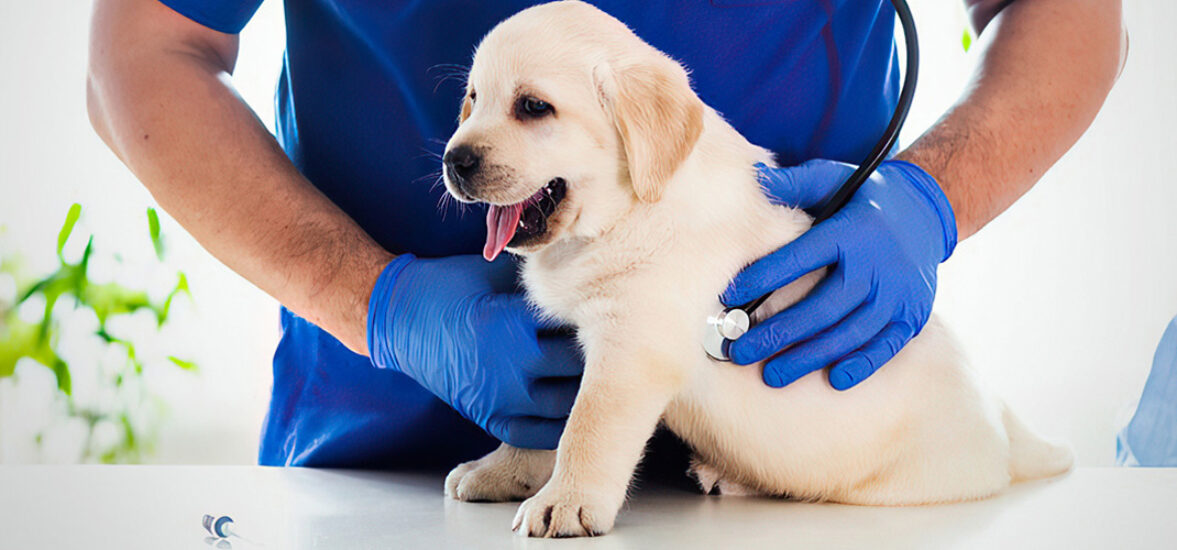
The puppy vaccination schedule in India usually begins at around 6 to 8 weeks of age, followed by additional core vaccine doses every 3 to 4 weeks until the puppy reaches at least 16 weeks. Rabies vaccination is generally given according to local regulations, the vaccine manufacturer’s instructions and your veterinarian’s advice. The exact schedule can vary depending on the puppy’s health, previous vaccinations, maternal antibodies, vaccine product and disease risk in your area.
Bringing home a puppy is an exciting experience, but the first few months also come with important responsibilities. Vaccination is one of the most important parts of early puppy care because young dogs are particularly vulnerable to several serious infectious diseases.
Whether you are bringing home a Labrador, Golden Retriever, Beagle, German Shepherd, Shih Tzu or another breed, keeping accurate vaccination records should be part of your puppy-care routine.
At Pups n Paws, the focus is not only on helping families find puppies but also on promoting responsible pet ownership and making it easier for families to learn about puppy care. The platform connects families with puppy listings and breeders across India while emphasizing ethical breeding, breeder credibility, transparency and puppy well-being.
Puppy Vaccination Schedule in India at a Glance
The following is a general guide based on current international veterinary vaccination recommendations. It is not a substitute for an examination or vaccination plan from your veterinarian.
| Puppy Age | Typical Vaccination Stage | What to Discuss With Your Vet |
| 6-8 weeks | First core vaccination | Distemper, parvovirus and adenovirus-containing combination vaccine |
| 9-12 weeks | Second core vaccination | Repeat core vaccine; other vaccines may be considered |
| 12-16 weeks | Final puppy core dose | Core vaccine dose to complete the primary series |
| Around 12+ weeks | Rabies, where appropriate | Follow Indian regulations and vaccine instructions |
| 16+ weeks | Review primary series | Vet confirms whether the puppy has completed its initial vaccination programme |
| Around 6 months | Follow-up | Vet may recommend an additional core vaccination depending on circumstances |
| 1 year and beyond | Booster programme | Follow the vaccine product, veterinarian and local requirements |
The 2024 WSAVA guidelines recommend core puppy vaccines beginning no earlier than 6 weeks and being repeated every 3 to 4 weeks until at least 16 weeks of age. They also note that rabies vaccination should follow local laws, regulations and licensed vaccine instructions.
Why Is Puppy Vaccination Important?
Puppies do not have the same level of immune protection as healthy adult dogs.
Some serious infectious diseases can spread between dogs through direct contact, contaminated environments or other routes. Vaccination helps prepare the puppy’s immune system to respond to specific infections.
Core vaccines for dogs commonly target diseases such as:
- Canine distemper
- Canine parvovirus
- Canine adenovirus
- Rabies, where required or appropriate
The exact combination used depends on the vaccine product and veterinary assessment.
Vaccination is therefore not simply another item on your puppy checklist. It is an important part of responsible dog ownership.
What Is the First Vaccination for a Puppy?
The first vaccination for a puppy is generally given when the puppy is around 6 to 8 weeks old, although the exact timing should be determined by a veterinarian.
The first core vaccination commonly protects against diseases such as canine distemper, canine parvovirus and canine adenovirus through an appropriate combination vaccine.
According to the 2024 WSAVA guidelines, core puppy vaccination should start no earlier than 6 weeks and continue at 3 to 4 week intervals until at least 16 weeks.
This is important because one vaccination does not necessarily mean a puppy has completed its primary vaccination series.
Puppy Vaccination Chart: 6 to 8 Weeks
At approximately 6 to 8 weeks, your veterinarian may recommend the puppy’s first core vaccine.
This may include protection against:
- Canine distemper virus
- Canine parvovirus
- Canine adenovirus
The veterinarian will first consider the puppy’s age, health and vaccination history.
If you are purchasing a puppy, ask the breeder or seller for the vaccination record rather than relying on a verbal statement that the puppy has been vaccinated.
What Should You Check?
Ask for:
- Date of vaccination
- Vaccine name
- Vaccine manufacturer, where recorded
- Veterinary clinic information
- Veterinarian’s signature or stamp, where applicable
- Puppy identification details
- Next vaccination date
Keep this record safely because you will need it for future veterinary visits.
Puppy Vaccination Chart: 9 to 12 Weeks
The next stage of the dog vaccination chart generally involves another core vaccination.
The interval is important because puppy vaccinations are usually administered as a series rather than as one single injection.
The 2024 WSAVA guidelines recommend repeating core vaccines every 3 to 4 weeks during the puppy period until at least 16 weeks.
Depending on the puppy and local disease risks, your veterinarian may also discuss additional vaccines during this period.
Do not add vaccines yourself based on an online schedule. Your veterinarian should determine which vaccines are appropriate.
Puppy Vaccination Chart: 12 to 16 Weeks
This is a particularly important stage in the puppy vaccination schedule.
A final core dose is generally given at or after 16 weeks, depending on the timing of the earlier doses.
Why is this necessary?
Puppies receive antibodies from their mother, and these maternal antibodies can sometimes interfere with the puppy’s response to vaccination. Repeating the core vaccine at appropriate intervals helps reduce the period during which a puppy may remain susceptible.
WSAVA recommends continuing the core puppy vaccination series until at least 16 weeks of age, with some high-risk situations warranting vaccination up to 20 weeks.
When Should a Puppy Get the Rabies Vaccine?
Rabies vaccination is particularly important in India because rabies remains a major public-health concern.
The exact age for the first rabies vaccination should be determined according to applicable Indian requirements, the licensed vaccine product and your veterinarian’s recommendation.
The WSAVA guidelines state that local laws and regulations should take priority for rabies vaccination and that product instructions should be followed. They also note that in some countries the first rabies vaccine is generally not given before 12 weeks.
Because rabies requirements can vary by jurisdiction and vaccine, don’t rely on a generic internet schedule alone.
Ask your veterinarian:
“When is my puppy due for its rabies vaccination, and when is the booster required?”
Puppy Vaccination at 4 Months
By approximately four months, many puppies have reached the end of their primary core vaccination series.
Your veterinarian should review:
- Previous vaccination dates
- Vaccine products used
- Puppy health
- Any missed doses
- Local disease risks
- Rabies status
- Whether additional vaccination is required
The puppy may still need continued protection and veterinary monitoring even after completing the initial series.
Do not assume that completing the puppy series means vaccinations are finished permanently.
Puppy Vaccination Around 6 Months
The 2024 WSAVA guidelines discuss considering revaccination at around 6 months rather than automatically waiting until 12 to 16 months in some situations. The exact approach depends on the veterinary assessment and vaccine used.
This is one reason it is better to maintain an ongoing relationship with a veterinarian instead of following a generic dog vaccination chart indefinitely.
Your veterinarian can review the puppy’s vaccination history and determine what is appropriate.
Puppy Vaccination at One Year
The one-year stage is another important review point.
Depending on the vaccine and local requirements, your veterinarian may recommend booster vaccination.
WSAVA notes that after the puppy vaccination programme, revaccination timing should take account of the vaccine’s duration of immunity and local requirements. For core vaccines, the guidelines discuss revaccination around 6 months and subsequently no more frequently than every three years for certain vaccines, while rabies timing depends on local laws and the licensed product.
This means there is no single “one-year vaccination” rule that applies identically to every dog.
Do Puppies Need Vaccines Every Month?
Not necessarily.
A common misunderstanding is that puppies need the same vaccine every month indefinitely.
The puppy series usually involves vaccinations spaced approximately 3 to 4 weeks apart during the early vaccination period. The series is designed to provide protection while accounting for factors such as maternal antibodies.
The 2024 WSAVA guidelines recommend core vaccination every 3 to 4 weeks until at least 16 weeks.
After the puppy series, the booster schedule changes.
Your veterinarian should determine the appropriate long-term vaccination plan.
Can an Unvaccinated Puppy Go Outside?
You should ask your veterinarian when it is appropriate for your puppy to visit public areas where other dogs may have been present.
Until adequate protection has developed, puppies may be vulnerable to infectious diseases.
However, completely isolating a puppy is not necessarily ideal either. WSAVA’s vaccination guidance specifically notes that careful socialisation can begin during the sensitive socialisation period before completion of the full vaccination series, provided appropriate precautions are taken.
Your veterinarian can help you balance socialisation with infection risk.
What About Deworming?
Vaccination and deworming are different parts of puppy healthcare.
A puppy may need a separate deworming programme based on age, risk and veterinary advice.
This is particularly relevant when buying a puppy because vaccination status alone does not tell you whether the puppy has received appropriate parasite control.
Pups n Paws listings can include information about vaccination and deworming. For example, current listings on the platform describe puppies receiving vaccinations and deworming according to schedule and veterinary care.
When considering a puppy, ask for records of both.
How to Check a Puppy Vaccination Record Before Buying
If you are searching for puppies for sale in India, don’t make your decision based only on photographs, breed, colour or price.
Before taking a puppy home, request its vaccination information.
Check the Puppy’s Age
The vaccination dates should make sense in relation to the puppy’s stated age.
Check Previous Vaccines
Look for the vaccine name and vaccination date.
Ask for Veterinary Records
A responsible seller should be able to explain what veterinary care the puppy has received.
Check Deworming
Ask when the puppy was last dewormed and when the next treatment is due.
Ask About the Next Vaccine
Knowing the next scheduled vaccination helps you continue the puppy’s healthcare without interruption.
Keep All Documents
Take the puppy’s vaccination and veterinary records with you when you visit your own veterinarian.
Why Vaccination Information Matters When Choosing a Puppy
Choosing a puppy is a long-term decision.
A responsible puppy platform should help families understand not only what puppy is available but also relevant information about the puppy’s background and care.
Pups n Paws describes its platform as focused on responsible pet ownership, ethical breeding, certified breeders and transparency.
The site’s available-puppy listings can include information such as breed, age, location, breeder details and care information. Its current dog archive contains puppies from locations including Bengaluru, Chennai and Visakhapatnam, with some listings offering delivery across India.
For example, one current Labrador listing on Pups n Paws states that puppies have been vaccinated and dewormed according to schedule and includes information about KCI registration and the parents.
This type of information is worth checking before bringing a puppy home.
Why Choose Pups n Paws When Looking for a Puppy?
Finding a puppy from a responsible source can be challenging, particularly if you are searching across different cities.
Pups n Paws provides an online platform where families can browse available puppies and learn more about different breeds and listings.
The platform highlights:
- Ethical breeding practices
- Certified dog breeders
- Puppy health and well-being
- Price transparency
- Breed information
- Convenient online puppy searches
- Connections with breeders across India
Pups n Paws currently serves families across cities including Delhi, Bangalore, Indore, Mumbai and Dehradun, while its listings extend to other locations as well.
The platform also provides breed profiles and puppy listings, allowing families to research their preferred breed before contacting a seller.
How to Find a Puppy on Pups n Paws
If you are planning to welcome a puppy into your family, start by researching the breed that suits your lifestyle.
1. Choose a Suitable Breed
Consider the dog’s adult size, exercise needs, temperament, grooming requirements and training needs.
Pups n Paws features popular breeds including Golden Retrievers, Labrador Retrievers, German Shepherds, Siberian Huskies and Dobermans, among others.
2. Browse Available Puppies
Visit the Pups n Paws dog listings and filter through available puppies by breed, age and location.
3. Review the Listing
Look for information about:
- Age
- Breed
- Location
- Breeder
- Vaccination
- Deworming
- Pedigree
- Registration
- Delivery availability
4. Ask for Vaccination Records
Before committing to a puppy, ask to see the vaccination documentation.
5. Arrange Veterinary Follow-Up
After bringing your puppy home, arrange a veterinary appointment and take all available records with you.
Puppy Vaccination Checklist
Use this checklist when bringing home a new puppy:
- Confirm the puppy’s date of birth
- Ask for the complete vaccination record
- Check the dates of previous vaccinations
- Ask which vaccine products were used
- Confirm the next vaccination date
- Ask about rabies vaccination
- Ask about deworming
- Take all records to your veterinarian
- Ask when the puppy can safely visit public dog areas
- Discuss socialisation with your veterinarian
- Keep vaccination records updated
Common Puppy Vaccination Mistakes to Avoid
Waiting Too Long for the First Vaccine
Do not delay the first veterinary vaccination unnecessarily. Discuss the appropriate starting point with your vet.
Assuming One Injection Is Enough
Puppy core vaccination is generally a series rather than one single injection.
Losing the Vaccination Card
Keep the vaccination record somewhere safe and take it to every veterinary appointment.
Ignoring Booster Recommendations
Protection needs to be maintained according to the vaccine and your veterinarian’s recommendations.
Buying a Puppy Without Asking About Health Records
Price and appearance should not be the only factors when selecting a puppy.
Following an Internet Chart Instead of Your Veterinarian
Online schedules are useful for understanding the general process, but they cannot account for your puppy’s individual health, vaccine history and local circumstances.
FAQs About Puppy Vaccination in India
When is the first vaccination for a puppy?
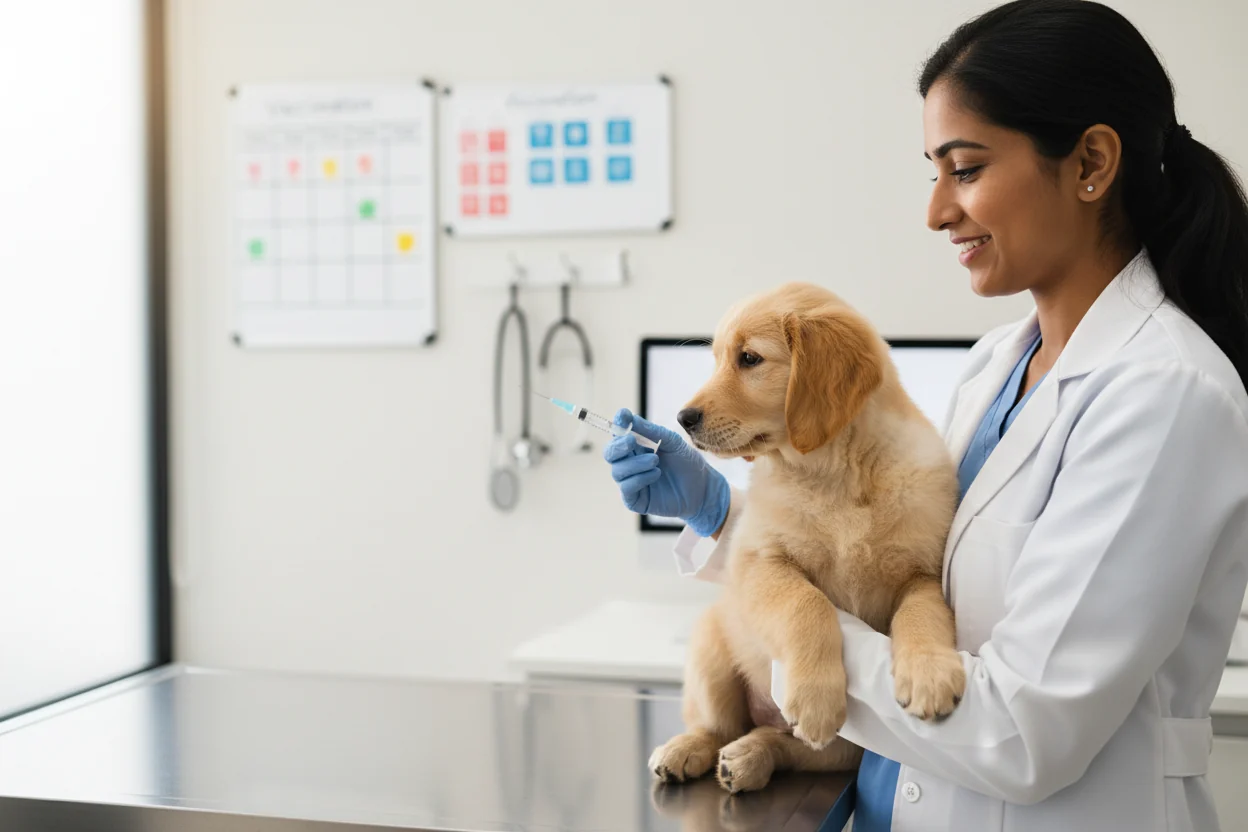
The first core puppy vaccination is commonly started at around 6 to 8 weeks, although the exact timing should be decided by a veterinarian. WSAVA recommends starting core vaccination no earlier than 6 weeks.
What is the puppy vaccination schedule in India?
A typical core series begins around 6 to 8 weeks and is repeated every 3 to 4 weeks until at least 16 weeks. Rabies vaccination follows applicable local requirements and the licensed vaccine instructions.
How many vaccines does a puppy need?
There is no single number that applies to every puppy. Core vaccinations are generally given as a series, while additional vaccines depend on the puppy’s risk, location, lifestyle and veterinary assessment.
When can a puppy get the rabies vaccine?
Rabies vaccination timing depends on applicable Indian requirements, the vaccine product and veterinary advice. WSAVA notes that local laws and regulations should take priority.
Does my puppy still need vaccines after four months?
Your veterinarian should review the puppy’s completed vaccination series and determine the appropriate follow-up and booster plan.
Can puppies be socialised before completing all vaccinations?
Careful socialisation can begin before completion of the full vaccination series, but exposure should be managed appropriately. WSAVA specifically recognizes the importance of socialisation during the sensitive puppy period while vaccination is ongoing.
Should I check vaccination records before buying a puppy?
Yes. Always ask for the puppy’s vaccination and deworming records and verify the information before bringing the puppy home.
Does Pups n Paws provide puppies with vaccination information?
Pups n Paws listings can include vaccination and deworming information. Individual listings should be checked carefully for the specific puppy’s health and vaccination details.
Final Thoughts
Following a proper puppy vaccination schedule in India is one of the most important responsibilities of a new dog owner. The general puppy core vaccination programme starts at around 6 to 8 weeks and continues at approximately 3 to 4 week intervals until at least 16 weeks, while rabies vaccination should follow applicable requirements and veterinary advice.
But vaccination is only one part of responsible puppy ownership.
Before bringing a puppy home, look at its overall health, vaccination history, deworming, breeder information and early care. After bringing the puppy home, arrange a veterinary check-up and keep its vaccination record updated.
If you are currently searching for a puppy in India, Pups n Paws can help you explore available breeds and puppy listings while providing information about breeders, locations and puppy care. The platform’s focus on responsible pet ownership, ethical breeding and transparency makes it a useful starting point for families preparing to welcome a new companion.
Ready to find your new family member? Explore the available puppies on Pups n Paws, review the puppy’s health and vaccination information carefully, and make your next step with confidence.
Important: This article provides general educational information and is not a substitute for veterinary advice. Vaccination timing can vary according to the puppy’s health, vaccine product, previous vaccination history, maternal antibodies, local disease risk and applicable regulations. Always follow the vaccination plan provided by your veterinarian.